Clear vs. Aluminum Hurricane Panels: Which Should You Buy?
If you are staying with removable panels, the material is the main choice. Most homes do best with some of each.
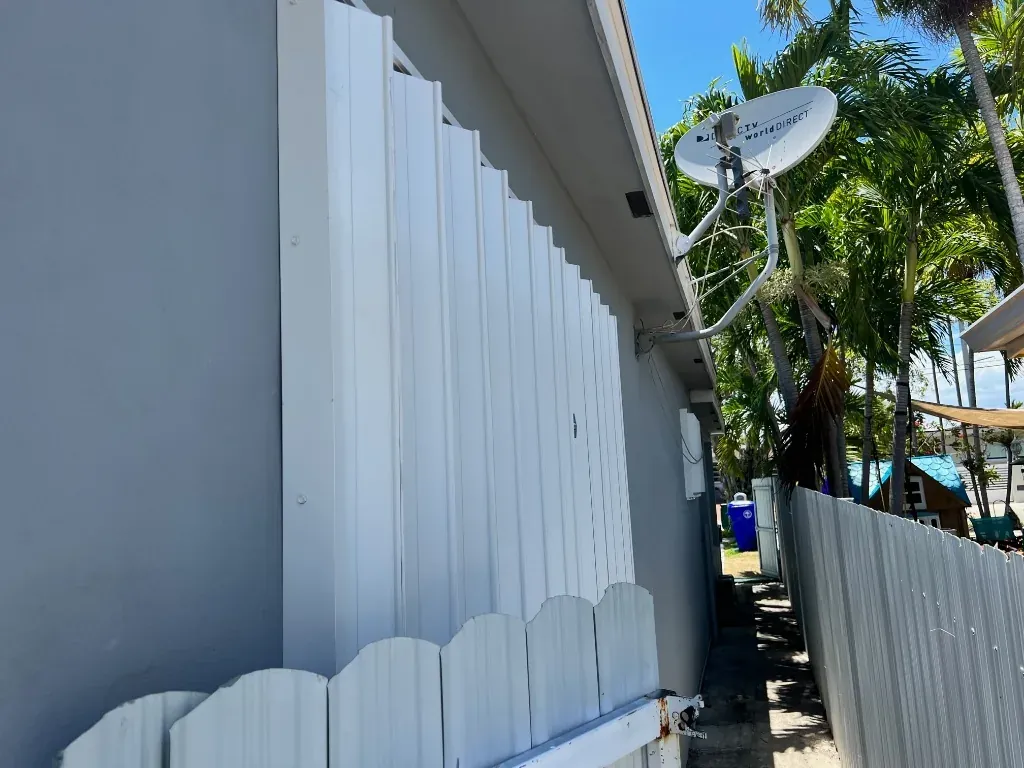
Aluminum panels cost the least and last for decades, but the house is dark once they are up. Clear polycarbonate panels cost more and let daylight in, so you can see outside during a storm and a power outage. A common plan is clear panels on one or two windows per main room and aluminum on the rest.
Removable storm panels come in three common materials: aluminum, galvanized steel, and clear polycarbonate. All three attach the same way and can be approved for Miami-Dade.
Side by side
| Aluminum | Steel | Clear polycarbonate | |
|---|---|---|---|
| Price | Low | Lowest | Highest |
| Weight | Light | Heaviest | Light |
| Light through the panel | None | None | Yes |
| Rust | No | Can rust if the coating is damaged | No |
| Edges | Sharp | Sharp | Smoother |
| Aging | Very little | Rust at scratches and cuts | Can scratch and haze with years of sun |
Published 2026 prices for installed storm panels run about $10 to $22 per square foot, with clear panels at the upper end and above. Ask for both prices on the same quote.
Why people choose clear
A boarded-up house is dark. In a long outage after a storm, with no air conditioning and no lights, that matters more than people expect.
Clear panels let you:
- See what is happening outside
- Move around the house in daylight without flashlights
- Leave panels up a little longer without living in a cave
Why people choose aluminum
- The lowest cost for a product that is light enough to handle
- It does not rust
- It lasts for decades in storage
- It gives privacy when you are away
Want a price for your own home?
We install and repair accordion shutters across Miami-Dade County. Estimates are free and there is no obligation.
The mixed plan
You do not need clear panels everywhere. Many homes use:
- Clear on one or two windows in the kitchen, the living room, and the main bedroom
- Aluminum on everything else
That keeps the cost close to an all-aluminum house and still gives you daylight.
Follow the approval for size and thickness
Panels are not interchangeable. The product approval for each one sets:
- The thickness of the material
- The maximum length of a panel
- How far each panel overlaps the next
- The tracks and fasteners it has to be used with
- How far the panel must sit from the glass, so it can flex without touching it
That last point matters more for some materials than others. A panel mounted too close to the window can protect the opening and still break the glass behind it. Use panels with the tracks they were approved with.
A quick way to decide
- Tight budget, every opening needs covering: aluminum throughout.
- You ride out storms at home: add clear panels in the rooms where you spend the time.
- Second story or heavy lifting is a problem: panels of any material are the wrong tool. Look at shutters.
Whichever you choose
- Check the approval. Every panel type needs its own Miami-Dade product approval, clear ones included. See what an NOA is.
- Label every panel with the window it belongs to.
- Store them flat and dry, and keep clear panels out of the sun so they stay clear.
- Keep the hardware together. See how to install storm panels.
Thinking about getting rid of panels altogether?
If the work of putting panels up is the real problem, a different material will not fix it. Accordion shutters will. See accordion shutters vs. storm panels.
Frequently asked questions
Are clear hurricane panels as strong as metal ones?
An approved clear panel has passed the same county tests as an approved metal panel. Check the product approval for the one you are buying.
Do clear panels turn yellow?
Polycarbonate can haze or scratch over many years, especially if it is stored in the sun. Storing panels indoors slows this.
Can I mix clear and aluminum panels on the same window?
Only if the product approval allows that combination. Ask your installer.
Miami Accordion Shutters installs and repairs hurricane shutters across Miami-Dade County, including Miami, Hialeah, Kendall, Doral, Coral Gables, Homestead, Cutler Bay, Miami Beach, and nearby communities. Call (786) 201-1300 for a free estimate.